I was sitting in a cramped, overly air-conditioned office last Tuesday, the kind where the fluorescent lights hum just a little too loud, and the Executive Director across from me just put her head in her hands. She looked at a stack of spreadsheets, then at her phone, which was buzzing for the tenth time in ten minutes, and said, "Brett, I feel like I'm running a marathon through waist-deep mud. Does all this ‘culture and strategy’ stuff even matter when I’m just trying to keep the lights on?"
To be honest... I didn't have a snappy, consultant-approved answer right away. Because if I’m honest, I’ve felt that way too. We talk about "Organizational Development" (OD) like it’s this lofty, academic pursuit found in leather-bound books, but when you’re in the trenches? It can feel like a luxury you can’t afford.
But here’s the thing about 2026: the mud is getting deeper. Between AI shifting how we actually work, the lingering weirdness of hybrid team dynamics, and a workforce that is, let’s face it, just plain tired, OD isn't a luxury anymore. It’s the shovel you need to dig yourself out.
The "Theory" Trap vs. The Trench Reality
I’ve spent plenty of time in the academic side of things, and yikes... it can get dry. You hear terms like "systemic intervention" and "humanistic values," and your eyes start to glaze over. But at Solved. Operations & Management Solutions, we don't really care about the $50 words. We care about what happens on Monday morning when your best employee hands in their notice because they’re "misaligned."
OD matters in 2026 because the distance between "having a plan" and "getting things done" has never been wider. We’re all working with what I call "wet cement" plans: you think you’ve set the foundation, but someone walks across it (or a new software update drops), and suddenly you’re staring at a mess.
If you're like me, you've probably tried to "fix" a team problem by just buying a new project management tool. (Guilty! I once spent three days setting up a board that nobody: including me: ever looked at again). But tools don't solve problems; people using processes solve problems. That’s the "Development" part of OD.

The ROI: It’s Not Just "Feel Good" Math
I know some of you are looking at your budget and thinking, “Brett, I can’t pay for ‘feelings’ right now.” I get it. But the data for 2026 is actually pretty staggering. Research shows that leadership development: a huge pillar of OD: generates an average return of $7 for every $1 spent.
Think about that for a second. If I told you a specific software would give you a 7x return, you’d buy it yesterday.
Beyond the dollars, targeted OD work: redesigning how work actually flows and how supervisors talk to their teams: can jump productivity by 25%. In a world where we’re all trying to do more with less, that 25% isn’t just a metric. It’s the difference between your team going home at 5:00 PM or staying until 8:00 PM burning out.
The Triage Framework: Reduce, Route, Resolve
When I walk into a company that’s "stuck," I usually apply my favorite triage framework. It’s simple, maybe a bit blunt, but it works when things are chaotic:
- Reduce: We look at everything on your plate. What doesn't move the needle? If it doesn't move the business forward, we kill it. Stop the "meetings about meetings." Stop wasting time on miscommunication.
- Route: We find the natural owner for the task. Most leaders are holding onto things they should have handed off years ago because they "know how to do it best." (I do this too... it's a hard habit to break). Give them the context, not just the task, and let them own it.
- Resolve: Only the stuff that requires your specific judgment stays with you.
OD consulting is the process of setting up the systems so that "Route" actually happens without everything falling apart.

Is Your Organization Independent of You?
This is the big question I ask every Executive Director or business owner I work with. If you disappeared for two weeks (hopefully on a beach, not with a flu), would the building still be standing when you got back?
We evaluate leadership based on how independent the organization is from them. In 2026, the "Hero Leader" model is dead. You can't be the bottleneck for every decision. Here are the indicators we look for:
- Delegated Decisions: Are decisions being made at the lowest possible level? Or does a $50 expense still need your signature?
- Distributed Relationships: If your top three clients only talk to you, you don't have a business; you have a very stressful job. We work to spread those relationships across the team.
- Accessible Processes: Are your core processes documented, or are they just living in your head? (If they're in your head, that's a single point of failure... and that's scary).
- Succession Planning: I know, it feels weird to talk about who takes over when you're still in the seat, but it’s the ultimate sign of a healthy organization.
The DiSC Factor in 2026
You can’t talk about organizational development without talking about how people actually communicate. I’m a huge fan of using DiSC assessments as a foundational tool. Why? Because most "operational" problems are actually "communication" problems in a trench coat.

When you understand that your "C" (Conscientious) project manager isn't being "difficult" by asking for more data, but is actually trying to save you from a mistake, everything changes. OD consulting takes these insights and bakes them into your manager toolkits. It moves from "that was a fun workshop" to "this is how we resolve conflict every day."
The "Messy" Middle
I’ll be the first to admit... this stuff is messy. I’ve walked into organizations thinking I had the perfect "strategy" in my bag, only to realize the real issue was two board members who hadn't spoken to each other in three years. You can't "process" your way out of that without doing the hard OD work of alignment.
Sometimes I get it wrong. I've pushed for a process change too fast and watched it crumble. But even then, there’s a lesson. Organizational development is a journey, not a destination (I know, I know... that’s a cliché, but it’s true). It’s about being a little bit better, a little more efficient, and a little more human every day.
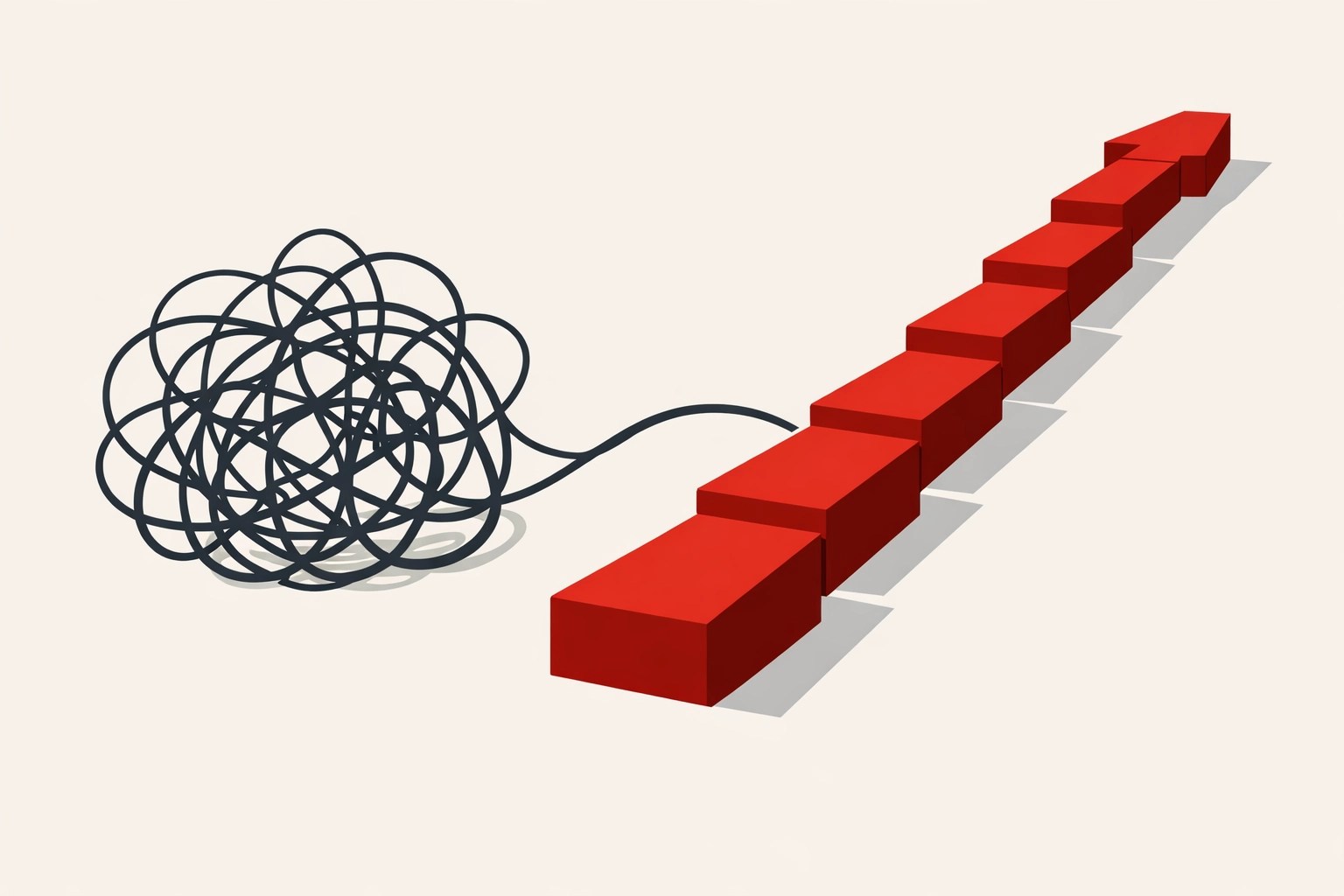
If I'm honest, the reason OD consulting matters so much in 2026 is that we’re all starving for a bit of clarity. We want to know that our work matters and that we aren't just spinning our wheels in that waist-deep mud.
Real Results in the Trenches
So, back to that ED in the windowless office. We didn't start with a 50-page strategic plan. We started by aligning her board's vision with daily execution. We used the "Reduce, Route, Resolve" framework to clear her calendar. We brought in DiSC to help her team stop tip-toeing around each other.
Six months later? She’s still running a marathon, but the mud is gone. She’s on solid ground.
Does OD consulting matter in 2026? Only if you want an organization that can survive the chaos without breaking the people who run it.
I'm curious: if you stepped away for two weeks right now, what's the first thing that would break? I'd love to hear about the "trench" issues you're facing. Maybe we can find a way to dig out together.
If you’re ready to stop spinning your wheels and start scaling with clarity, let’s chat. You can reach out to us here and we can figure out what "Solved" looks like for you.