I’ll never forget the time I thought I was being a "hero" for my team. It was a Tuesday, around 2:00 PM, and I was sitting in my car in a grocery store parking lot, ice cream melting in the back seat, while I frantically tried to explain a specific vendor’s "quirks" to one of my project managers over the phone. My kids were arguing about who got the last blue Gatorade, the sun was beating down, and there I was... playing the middleman for a conversation that should have never involved me in the first place.
I realized right then, with a sticky steering wheel and a rising sense of dread, that I hadn't built a business. I’d built a bottleneck. And that bottleneck’s name was Brett.

At Solved. Operations & Management Solutions, we believe true leadership is about building systems that don't depend on the leader.
If I’m honest... I think a lot of us in leadership roles suffer from this "hero complex." We like being the one with all the answers. We like being the person the key donor calls, or the one who knows exactly how to fix that weird glitch in the CRM. But here’s the cold, hard truth: if your organization can’t breathe without you in the room, you’re not a leader. You’re a single point of failure.
The "Hit by a Bus" Fallacy
Usually, when we talk about succession planning, people think about retirement parties, gold watches, and Florida. Or, they think about the "hit by a bus" scenario, that grim hypothetical where the CEO suddenly disappears. But let’s be real... it’s rarely a bus. Usually, it’s the flu. Or a family emergency. Or just a really long, much-needed vacation where you actually want to turn your phone off (imagine that!).
Succession planning isn't just about who takes over in ten years. It’s about who is empowered to make decisions today.
One of the biggest gaps I see in strategic leadership is what I call "Relationship Concentration." It’s when the Executive Director or the Owner holds all the keys to the most important external relationships. The donors only talk to the ED. The major vendors only have the Owner’s cell. The Board only trusts the person at the top.
This is dangerous. Not just for the leader, but for the health of the entire mission. We need Relationship Distribution.

(Suggested: A clean, modern photo of a diverse team collaborating around a table, showing a sense of shared responsibility and connection.)
Enter the Framework: Reduce → Route → Resolve
At Solved., we’re big on making things simple. When I'm working with a leader who feels overwhelmed, or who is realizing they are the bottleneck, we apply a triage framework to their daily work: Reduce, Route, and Resolve.
- Reduce: This is about looking at your to-do list and ruthlessly cutting the things that don't actually move the needle. Are you attending meetings just because you’ve always attended them? Stop. Are you CC’d on every email chain? Unsubscribe. If it doesn't align with the vision, it’s gotta go.
- Route: This is the heart of succession planning. You need to route tasks and relationships to their natural owners. If a vendor calls you, don't answer the question yourself. Introduce them to your Operations Manager and tell the vendor, "This is the person who will be handling this from now on." You have to give them the context and the authority to succeed.
- Resolve: Only when a task requires your specific, unique judgment should you handle it. Everything else should be reduced or routed.
It sounds easy, right? But it’s hard. It hurts the ego a little bit to realize that the team can actually do a great job without your input... but that’s the goal! (Or at least, it should be.)
How Independent is Your Organization?
I often evaluate an Executive Director (ED) not by what they do, but by how much the organization doesn't need them. It’s a bit of a paradox, I know... but the best leaders are the ones who are constantly working themselves out of a job.
If you’re wondering how you’re doing in this area, look at these "Independence Indicators":
- Decisions made at appropriate levels (delegation): Can your team spend $500 without asking you? Can they change a project deadline? If every decision flows up to your desk, you haven't delegated; you've just created a queue.
- Distributed relationships across the team: Does your top donor know your Development Director? Does your main client have a relationship with the account manager that is just as strong as their relationship with you?
- Clearly documented priorities and processes: If you disappeared for two weeks, would the team know what the #1 priority is? Is the "how-to" for your core operations living in someone’s head, or is it documented and accessible?
- Work continuity during absences: When you go on vacation, does the work stop? Or worse, do you spend the whole time checking Slack? A healthy organization keeps humming even when the "top" person is offline.
- Regular succession planning: Are you talking about the future openly? Not just "if I leave," but "as we grow, who is the next leader for this department?"
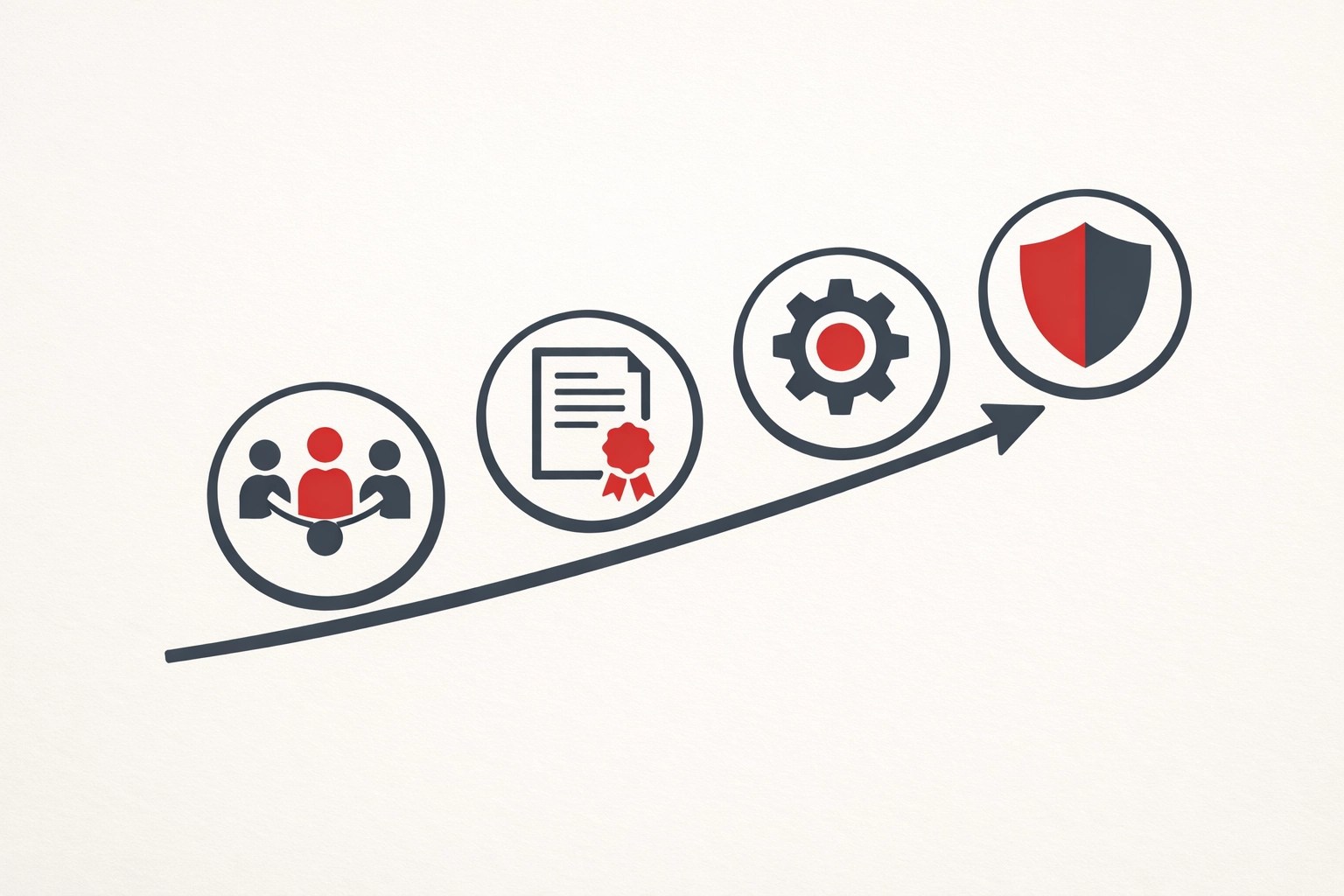
(Suggested: A graphic showing a checklist of the Independence Indicators with a clean, professional aesthetic.)
The Pride of Knowledge
I wrote about the pride of knowledge a while back, and it really hits home here. We sometimes hold onto information because it makes us feel essential. We keep those key relationships to ourselves because it feels like job security.
But in a non-profit or a growing business, that pride is a weight. It slows down the mission. If you really care about the impact your organization is making, you’ll want that impact to outlast your tenure. You’ll want the board to be fully on board with an operational structure that doesn't crumble if you take a sabbatical.
Why This Matters for Your Culture
When you distribute relationships and decision-making power, you’re telling your team: "I trust you."
That trust is the fuel for team engagement. If you’ve ever wondered why team engagement strategies fall flat, it’s often because the team feels like they are just "helpers" for the leader, rather than owners of the mission. When you "Route" a key relationship to a team member, you’re giving them a seat at the table. You’re giving them a reason to stay.
I’ve seen organizations where the ED was so protective of their donor list that when they finally retired, half the donors left because they didn't know anyone else at the organization. They weren't connected to the mission; they were connected to a person. Yikes. That’s a failure of stewardship.

(Suggested: A photo representing "The Bridge", a visual metaphor for moving from individual-led to system-led leadership.)
Taking the First Step (It’s Messy, I Promise)
Look, I’m still learning this. Even after years in consulting, I still catch myself trying to "Resolve" things that I should be "Routing." It’s a habit we have to break every single day.
If you’re feeling like you’re stuck in the "grocery store parking lot" phase of leadership, here is my challenge to you:
- Pick one relationship this week, a vendor, a client, a donor, and introduce them to a team member.
- Tell that team member, "I want you to be the primary point of contact for this. I’m here if things get really hairy, but I trust your judgment."
- Then... and this is the hard part... actually let them do it. Don't hover. Don't "check-in" every five minutes.
Succession planning isn't a document you file away in a drawer for the day you retire. It’s a living, breathing operational safety net that you build one distributed relationship at a time. It’s what allows your mission to scale, your team to grow, and you... well, it might just allow you to actually enjoy that ice cream before it melts.
I’d love to hear how you’re handling this. Does your team have the keys they need? Are you the hero, or are you the architect? Drop me a note or reach out: I’m always up for a conversation about how we can make our operations a little more "human" and a lot more resilient.
Stay focused on the mission,
Brett Bortnem
Owner & Principal Consultant
Solved. Operations & Management Solutions