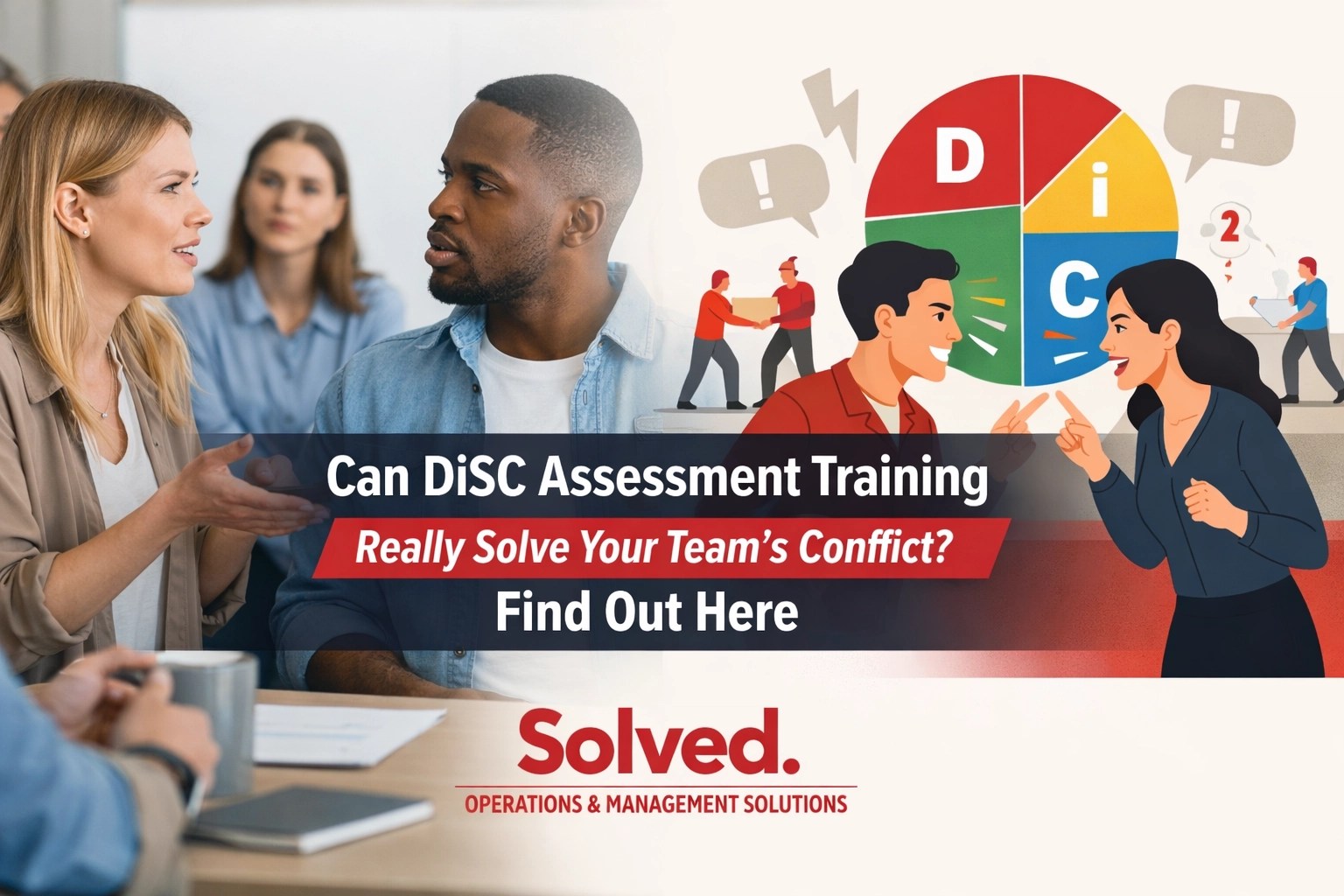
I remember sitting in a windowless conference room about eight years ago, staring at a half-eaten tray of sandwiches and feeling like I’d completely failed my team. We were in the middle of a "strategy session," which is usually corporate speak for "let’s sit in a room until we’re all frustrated."
Two of my best people, let’s call them Sarah and Mike, were practically at each other's throats. Sarah was firing off data points and demanding timelines, while Mike was leaning back, visibly checked out, muttering about how we were "losing the heart of the project."
If I’m honest, I just wanted to crawl under the table. I was the leader, right? I was supposed to have the magic words to make them play nice. But instead, I just sat there, watching the tension rise like steam from a kettle... Yikes.
Maybe you’ve been there. Maybe you’re there right now. You have a team of incredibly talented individuals, but for some reason, the gears are grinding instead of turning. You’ve thought about organizational development consulting, and you’ve definitely heard of DiSC. But there’s that nagging question: Can a personality test really fix this mess?
The short answer? Yes... but probably not in the way you think.
The Misconception of the "Magic Bullet"
When people first look into DiSC assessment training, they’re often looking for a "fix." They want a workshop that will act like a giant reset button for their office culture. I used to think the same way. I figured if everyone just understood their "letters," the conflict would evaporate overnight.
But here’s the thing I’ve learned after 30+ years in the business: DiSC isn't a magic wand. It’s a mirror.
Most workplace conflict doesn’t come from a lack of skill or a lack of commitment. It comes from misattribution. (That’s a fancy way of saying we assume people are being difficult on purpose when they’re actually just being themselves.)
When Sarah was demanding data, Mike didn’t see a "High C" (Conscientious) person looking for accuracy; he saw someone being a "cold, controlling micromanager." And when Mike was talking about "the heart," Sarah didn’t see a "High S" (Steadfast) person valuing team harmony; she saw someone being "vague and lazy."
Once we brought in a structured framework, the conversation changed. It wasn’t "Mike is lazy"; it was "Mike is an S, and he needs to know how this affects the people before he can commit to the data."

Why One Workshop Won’t Stick
I’ve seen it a hundred times. A company hires a consultant, everyone does a fun four-hour workshop, they laugh about their results, and then... they go right back to their desks and continue the same old arguments.
If you’ve read my previous thoughts on why one workshop won’t stick, you know that I’m a bit cynical about "event-based" training. Real change, the kind that actually lowers the temperature in the room, happens in the follow-up.
To really solve conflict, you have to move past the "What am I?" phase and get into the "How do I adjust for you?" phase.
The Four Styles in the Heat of Battle
In a conflict situation, our "natural" styles come out in full force, and usually, they clash like cymbals.
- The Dominant (D): They want to win. They get loud, direct, and sometimes aggressive. In their mind, they’re just being efficient. To everyone else, they’re a bulldozer.
- The Influencing (i): They want to be liked. In a conflict, they might get emotional or try to "gloss over" the hard stuff with humor. To a 'D' or a 'C', they look like they aren't taking things seriously.
- The Steadfast (S): They want peace. They’ll shut down, give the "silent treatment," or agree just to make the yelling stop. This drives the 'D' styles absolutely crazy because they can’t get a straight answer.
- The Conscientious (C): They want to be right. They’ll bring a 20-page spreadsheet to a fistfight. They become overly critical and pedantic, which makes the 'i' and 'S' styles feel personally attacked.
I’ve been guilty of all of these at one point or another (mostly the 'D' and 'i' stuff... if I’m being vulnerable). I remember a time I pushed a project through sheer force of will, ignoring my 'S' team members. I thought I was being a "strong leader." In reality, I was just creating a reservoir of resentment that took months to drain.

How DiSC Actually Solves the Problem
So, back to the big question: how does it solve the conflict?
1. It Creates a Neutral Language
When you use a tool like DiSC, you stop using loaded words like "bossy" or "passive-aggressive." Instead, you start saying things like, "I know you’re a High D, so I’m going to give you the bottom line first," or "I know you’re a High C, so I’ve attached the full report for you to review before our meeting."
It removes the sting. It makes the conflict about communication styles rather than character flaws.
2. It Builds Psychological Safety
Conflict thrives in the dark. When we don't understand why someone is acting a certain way, we fill in the gaps with our own insecurities. DiSC acts as a flashlight. It helps team members feel "seen" and understood.
I’ve seen teams that were on the brink of collapse suddenly find common ground just because they finally understood that their coworker wasn't "out to get them", they just processed information differently. This is a core part of the organizational development consulting we do at Solved. We aren't just looking at the boxes on an org chart; we're looking at the humans inside them.
3. It Identifies "Friction Points" Before They Start
If I know I have two High Ds working on the same project, I can predict there’s going to be a power struggle. I can get ahead of it by defining decision rights clearly from day one.
Similarly, if you have a team of all 'S' styles, you might have a "nice" culture that actually struggles with conflict because no one wants to hurt anyone’s feelings. I actually wrote a whole post about why nice cultures struggle with conflict, and DiSC is the best tool I’ve found to navigate those "polite" minefields.
The Role of the Consultant (The "Solved." Perspective)
You might be thinking, "Brett, can't I just buy a bunch of books and have my team read them?"
You could... but would they? (To be honest, most of those books end up as very expensive coasters.)
The reason Solved. Operations & Management Solutions exists is that operations and people are inseparable. You can have the best processes in the world, but if your team can’t talk to each other, the process will fail every single time.
When we come in for DiSC assessment training, we don't just hand out reports. We look at your operational rhythms. We look at how your meetings are run, how your projects are managed, and how your leadership communicates. We help you weave the DiSC language into the very fabric of your business.
It’s about moving from "knowing" to "doing."

A Small Warning (Because I Promised to Be Honest)
I have to be a bit of a buzzkill for a second. DiSC will not solve conflict if you have a "toxic" person who refuses to change. It’s a tool for people who want to work better together.
If someone is using their DiSC profile as an excuse, "Well, I'm a High D, so that's why I'm allowed to be a jerk to you", then you don't have a communication problem; you have a performance and culture problem. DiSC isn't a "get out of jail free" card. It’s a commitment to adapt.
Adaptation is hard. It’s uncomfortable. It requires me to stop talking and listen to the 'C' style who has concerns, even when I just want to charge ahead. It requires the 'S' style to speak up and share their truth, even when it feels like they’re "rocking the boat."
What’s the Next Step?
If your team is struggling with conflict, don’t just ignore it. Conflict is like a leak in your plumbing, it doesn't get better on its own; it just rots the floorboards.
Start by acknowledging that the conflict might not be about who your people are, but how they are communicating. Maybe you need a workshop, or maybe you need a deeper dive into your team engagement strategies.
If you're curious about how this could work for your specific team, whether you're a small business, a non-profit, or a ministry, I’d love to chat. You can check out more about our DiSC offerings here.
To be honest, I’m still learning this stuff too. Even after all these years, I still catch myself reverting to my "default" when I’m stressed. But having the framework gives me a way back to the table. It gives me a way to say, "Hey, I realize I was being a bit of a bulldozer there... let's try that again."
And sometimes, that’s all the "solution" your team really needs.
I’d love to hear from you... Have you ever used DiSC or another assessment? Did it actually change anything, or did the reports just end up in a drawer somewhere? Let’s talk about it.