


I’m sitting at my desk right now, looking at a stack of folders, three different browser windows (each with about fifteen tabs open), and a half-empty cup of coffee that has definitely gone cold. If I’m being honest... I’m a little embarrassed. Even after 30+ years in operations and management, I still have those days where I feel like I’m spinning a dozen plates, and if I move too fast, they’re all going to come crashing down on my head.
Have you ever felt that way? Like you’re working incredibly hard, maybe even putting in ten-hour days, but at the end of the week, you look back and realize you didn’t actually finish anything?
It’s a specific kind of exhaustion. It’s the "busy but not productive" trap. I’ve fallen into it more times than I’d like to admit. I remember one specific Tuesday a few years back; I was trying to launch a new consulting package, manage a property rehab for a client, and prep for a team engagement workshop all at once. I felt like a hero for "multitasking." But by Friday? The proposal was half-written, the rehab crew was waiting on a decision I’d forgotten to make, and I was frantically Googling "how to survive a burnout."
Yikes. It wasn’t my finest moment.
But it taught me a lesson that changed everything about how we operate at Solved. Operations & Management Solutions. It’s a simple trick. It sounds almost too easy to be true, but it is the single most effective way to improve your project management and, more importantly, your follow-through right now.
The trick? Stop starting, and start finishing.
Wait, let me say that differently. You need to embrace WIP Limits.
The "In-Progress" Purgatory
WIP stands for "Work In Progress." In the world of project management, we often treat our "In Progress" column like a junk drawer. We throw everything in there. A new idea? In progress. A client request? In progress. That complicated project we’re procrastinating on? Definitely in progress.
The problem is that our brains aren’t actually wired to handle that much "open" space. Every time we switch from one half-finished task to another, we pay what scientists call a "context-switching tax." We lose focus, we lose time, and we lose the momentum required to actually cross the finish line.
If you’re like me, you might think that by having ten things "in progress," you’re making progress on ten things. But the reality? You’re just delaying the completion of everything.

My Own "Ouch" Moment with Follow-Through
A while back, I was working with a non-profit team that was struggling to scale their impact. They were passionate, brilliant, and absolutely drowning. Every meeting ended with twenty new "action items." When I looked at their project board, they had 45 tasks in the "Doing" column. For a team of five people.
I had to be the bearer of bad news. I told them, "You guys aren't actually doing 45 things. You’re just thinking about 45 things while failing to finish one."
It stung. I knew it stung because I’d lived it. (I’ve been that guy sitting in the back of a sedan at a job site, trying to reply to emails while pretending I knew exactly what the contractor was asking me... I didn't.)
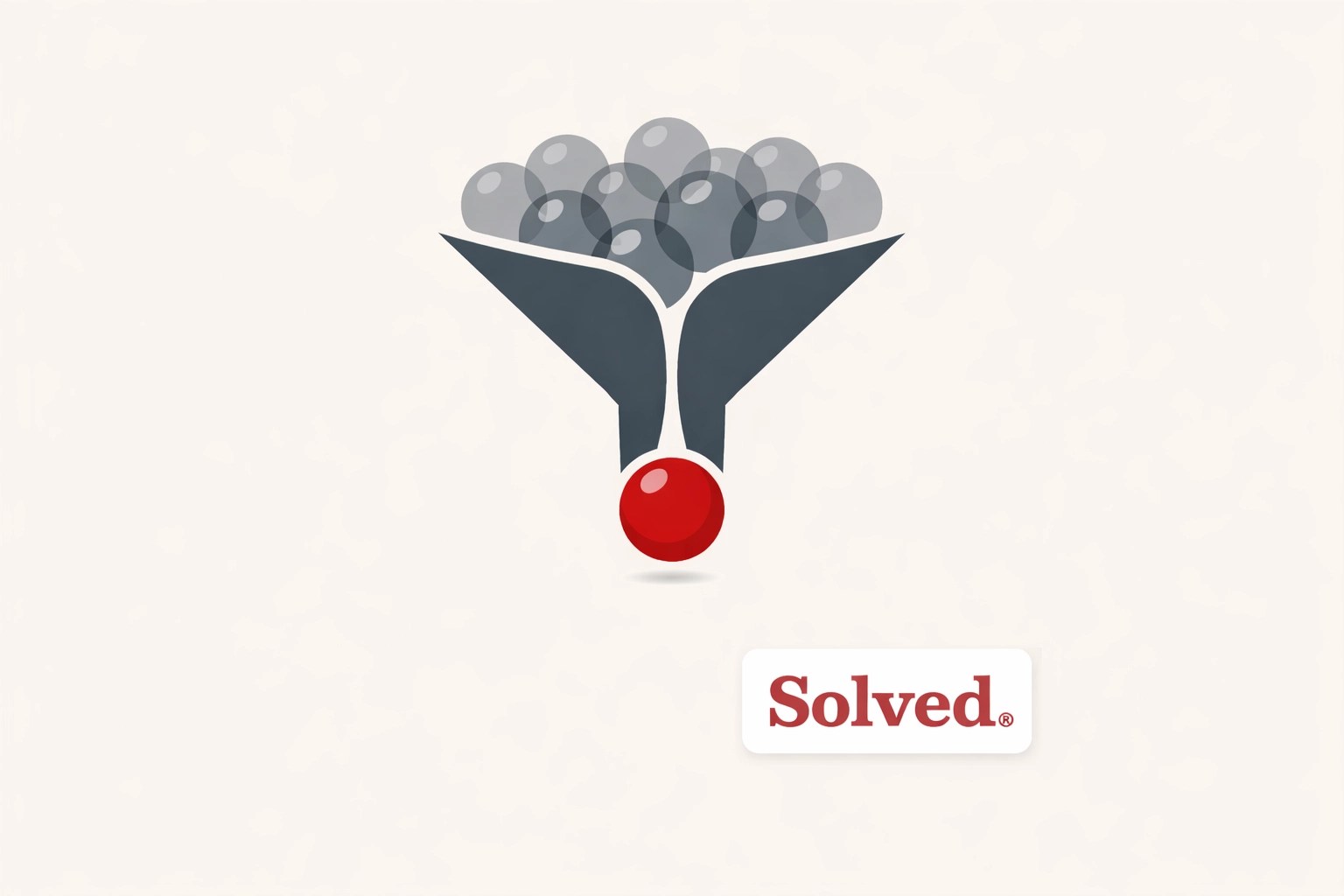
The simple trick we implemented, and the one I want you to try today, is setting a hard limit on how many things can be "In Progress" at any given time. For this team, we set the limit to five. Just five.
If they wanted to start something new, they had to move one of those five to "Done."
How to Set Your Own WIP Limits (The Simple Way)
You don’t need a $500-a-month software subscription to do this. You just need a little bit of discipline and maybe some sticky notes.
- Visualize the Work: Whether it’s a physical whiteboard or a digital tool, you must see your workflow. Create three columns: To-Do, Doing, and Done.
- Pick Your Number: If you’re a solo operator, your "Doing" limit should probably be 2 or 3. If you have a team, maybe it’s one task per person plus one for the group.
- The "One-In, One-Out" Rule: This is the hard part. If your "Doing" column is full, you are legally forbidden (okay, maybe just professionally discouraged) from starting anything else. You must finish something first.
It sounds restrictive, doesn't it? It feels like you’re moving slower. But here’s the magic: when you focus all your energy on finishing one task, you actually get it done faster. And then you move to the next. Suddenly, your "Done" column starts filling up, and that feeling of static in your brain starts to clear.
Why We Struggle to Follow Through
If it’s so simple, why don’t we do it?
To be honest, I think it’s because we’re afraid. We’re afraid that if we aren’t "starting" something new, we’re falling behind. We’re afraid of saying "not yet" to a client or a colleague. We want to be the person who says "I’m on it!" to everyone.
But there is a massive difference between being responsive and being effective. I’ve learned that my clients at Solved. value a finished, high-quality result far more than a "quick start" that drags on for six months.
I’ve also noticed that follow-through is often a communication issue. We don’t have clear goals, so we drift. If you find yourself or your team struggling to hit those deadlines, it might be time to look at how you’re communicating. Sometimes, a lack of follow-through isn’t a character flaw; it’s just a mismatch in how we process information. (I talk a lot about this in our DiSC assessment training, where we look at why some personality types love starting while others live to finish).
The Role of a Strategic Leader
As a leader, your job isn't just to generate ideas; it's to create the environment where ideas can actually cross the finish line. I’ve written before about the role of a strategic leader, and a huge part of that is protecting your team's focus.
When you allow (or worse, encourage) your team to juggle fifteen priorities at once, you aren't being a "dynamic" leader. You're being a bottleneck. You’re creating a culture of "busy-ness" rather than a culture of "results."
I’ve had to look in the mirror and tell myself that more than once. It’s not easy to admit when our own management style is the reason projects are stalling. But once you embrace the simplicity of focusing on less to achieve more, everything changes.
What You Can Do Right Now
If you’re feeling overwhelmed today, try this:
- List everything you are currently "working on."
- Circle the two most important items.
- Put everything else on a "Wait" list.
- Don’t touch the "Wait" list until one of those two circled items is 100% finished.
It might feel like wet cement at first: heavy and hard to move: but I promise, once it sets, you’ll have a much firmer foundation for your business.
I’m still learning this, even after all these years. I still get tempted by the shiny new project or the "quick" task that ends up taking four hours. But I’m getting better at catching myself. I’m getting better at saying, "I’d love to do that, but I need to finish this first."
Let’s Chat About Your Operations
Project management doesn't have to be a nightmare of spreadsheets and stress. Usually, it's just about getting the right systems in place so your people (and you!) can actually succeed. Whether you’re running a small business, a non-profit, or managing properties, the principles of follow-through remain the same.
If your team is struggling to get things across the finish line, I’d love to help you figure out why. We can look at your operational rhythms or dive into some coaching to get you back on track.
To be honest, I don’t have all the answers. I’m a fellow traveler on this road, trying to make things run a little smoother every day. But I do know that when we simplify, we win.
What’s one thing you’re going to finish today before you start something else? I’d love to hear about it. Drop me a line or reach out through our contact page.
Now, if you’ll excuse me... I have a cold cup of coffee to microwave and a proposal I really need to finish.
Talk soon,
Brett Bortnem
Owner & Principal Consultant
Solved. Operations & Management Solutions

One thought on “The Simple Trick to Improve Your Project Management and Follow-Through Right Now”