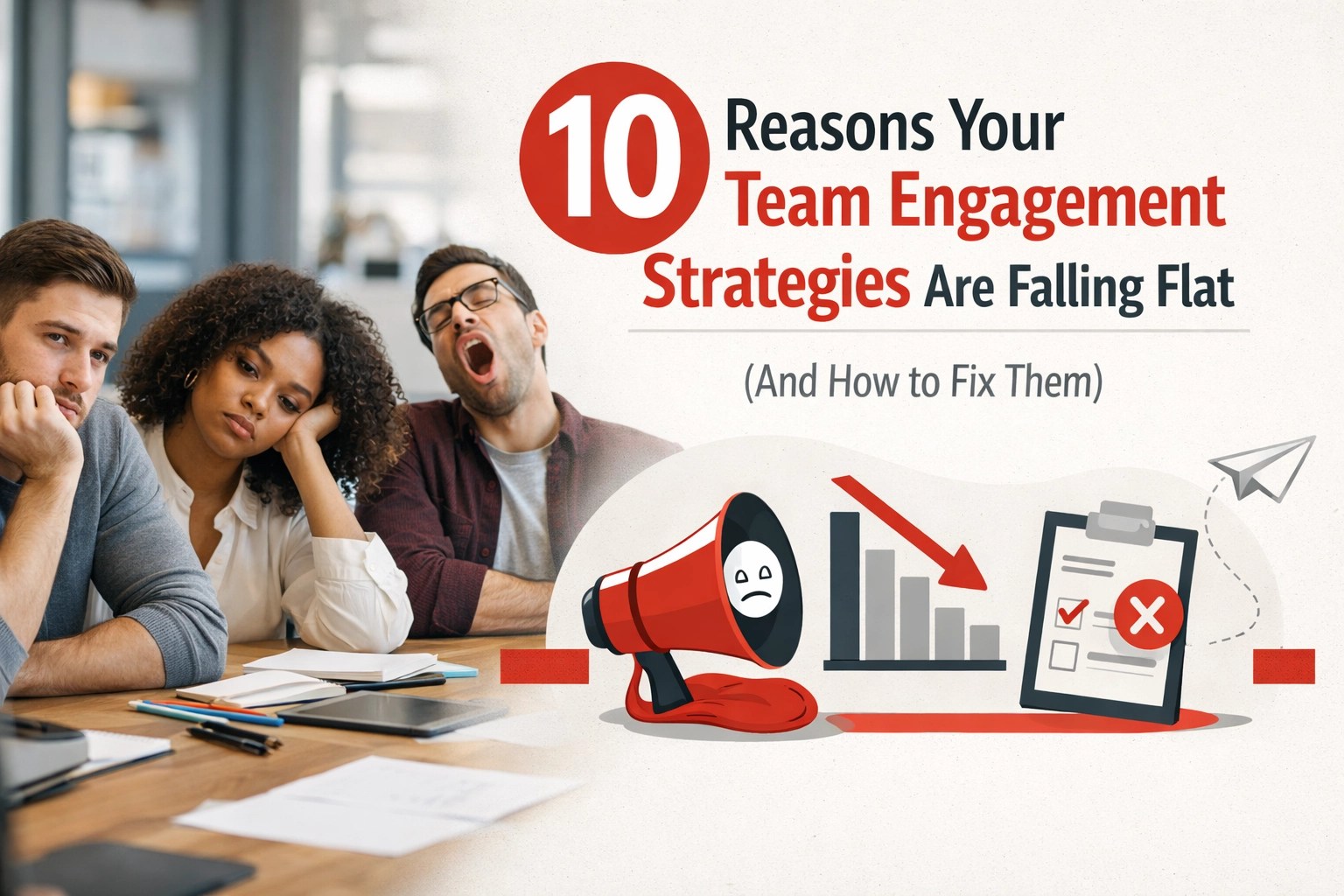
 I remember sitting in the back of a mid-sized sedan about eight years ago, heading to a regional "team building" retreat that I had personally spent weeks planning. I had the spreadsheets, the color-coded agendas, and enough catered wraps to feed a small army. I was convinced this was the moment we’d finally turn the corner on morale.
Then I looked at the faces of the two managers sitting in the seat in front of me.
They weren't talking about the strategic goals or the exciting new initiatives. They were quietly commiserating about how "out of touch" the home office was and how they’d have to work through the weekend to make up for the time they were "wasting" at this retreat.
Yikes.
It was a gut punch. If I’m honest, I wanted to jump out of the car right there on the interstate. I had fallen into the trap that so many of us in leadership do: I was trying to "solve" engagement from the top down, without actually understanding the people I was trying to engage.
We’ve all been there. You see the turnover numbers creep up, or the "vibe" in the office feels a bit heavy, so you roll out a new program. A month later? Nothing has changed. If anything, people seem more annoyed.
After 30+ years in operations and management, I’ve realized that engagement isn't something you do to people; it’s something you create with them. If your strategies are falling flat, it’s usually for one of these ten reasons.
I remember sitting in the back of a mid-sized sedan about eight years ago, heading to a regional "team building" retreat that I had personally spent weeks planning. I had the spreadsheets, the color-coded agendas, and enough catered wraps to feed a small army. I was convinced this was the moment we’d finally turn the corner on morale.
Then I looked at the faces of the two managers sitting in the seat in front of me.
They weren't talking about the strategic goals or the exciting new initiatives. They were quietly commiserating about how "out of touch" the home office was and how they’d have to work through the weekend to make up for the time they were "wasting" at this retreat.
Yikes.
It was a gut punch. If I’m honest, I wanted to jump out of the car right there on the interstate. I had fallen into the trap that so many of us in leadership do: I was trying to "solve" engagement from the top down, without actually understanding the people I was trying to engage.
We’ve all been there. You see the turnover numbers creep up, or the "vibe" in the office feels a bit heavy, so you roll out a new program. A month later? Nothing has changed. If anything, people seem more annoyed.
After 30+ years in operations and management, I’ve realized that engagement isn't something you do to people; it’s something you create with them. If your strategies are falling flat, it’s usually for one of these ten reasons.
1. The "Ivory Tower" Design
Most engagement strategies are designed in a boardroom by people who haven't worked the front line in a decade (if ever). We think we know what the team wants: better coffee, maybe a ping-pong table?: when what they actually need is a functional printer or a software update that doesn't crash every Tuesday. The Fix: Stop guessing. Involve employees from every level in the strategy development. When I’m doing operational consulting, the first thing I do is talk to the person who’s been there the longest and has the least "fancy" title. They usually know exactly where the friction is.2. The Middle Management Gap
You can have the most inspiring vision in the world, but if your middle managers aren't bought in, it’s dead on arrival. If your managers see engagement initiatives as "extra work" instead of the actual work, they’ll communicate that cynicism to their teams (just like those managers in the sedan with me). The Fix: Build credibility with your managers first. Don't just hand them a finished plan; ask for their input during the "wet cement" phase (when things can still be changed). They need to feel like authors, not just narrators.3. We’re Listening... But Not Really
A lot of organizations rely on what I call "anecdotal filtering." You hear a complaint from one person, you assume everyone feels that way, and you build a whole policy around it. Or worse, you only listen to the loudest voices in the room. The Fix: You need objective data. Structured, regular feedback mechanisms: like surveys or coaching sessions: provide a much clearer picture than the "office grapevine." It removes the bias and gives everyone a voice, not just the extroverts.
4. Treating Symptoms, Not the Disease
If your team is burnt out, a "Wellness Wednesday" email isn't going to fix it. That’s like putting a band-aid on a broken leg. Often, "disengagement" is just a symptom of a much deeper operational issue: like poorly defined roles or a toxic culture of "nice" that avoids conflict. The Fix: Dig into the "why." If people are checked out, ask follow-up questions. "Tell me more about why that process is frustrating." Usually, you’ll find the root cause is a lack of resources or a bottleneck in communication.5. The Survey Graveyard
This is probably the biggest trust-killer I see. A company sends out a big engagement survey, the employees take the time to fill it out, and then... nothing. Six months go by, and not a single thing has changed. The Fix: If you ask for feedback, you must act on it. Even if you can’t fix the problem right away, tell them why. "We heard you on the staffing levels; we can’t hire today, but we are re-evaluating the workflow to take some of the pressure off." Communication is the bridge between feedback and trust.6. The "Expert" Trap
Sometimes as leaders, we develop a bit of "pride of knowledge." We think because we have the title, we have to have all the answers. We dismiss employee ideas because they don't fit our "strategic vision." The Fix: Humble yourself. I’ve learned (often the hard way) that the person doing the job every day is the expert on that job. When you visibly act on a staff member's idea, you’re not just fixing a process; you’re telling that person they matter.
7. Micromanaging the Life Out of the Team
Nothing kills engagement faster than a lack of trust. If you’re checking every CC'd email and hovering over every task, you’re essentially telling your team, "I don't think you're competent." The Fix: Hire great people and then: and this is the hard part: let them do their jobs. Use tools like DiSC assessments to understand how your team prefers to work and communicate. When you give people autonomy, they take ownership. When you take away autonomy, they take a nap (spiritually speaking).8. Bad Performance Conversations
I used to hate performance reviews. I’d walk in with a checklist and ask "Why did you do it this way?" in a tone that probably sounded a lot more accusatory than I intended. It felt like a trial, not a conversation. The Fix: Shift from "blame" to "collaboration." Instead of "Why did you fail?" try "Tell me more about your process so we can figure out where the breakdown happened." It turns the problem into something you’re solving together, rather than a weapon you’re using against them.9. The "Flavor of the Month"
Have you ever worked somewhere where the leadership read a new book every month and completely changed the strategy based on it? It’s exhausting. Constant shifting creates confusion and makes people stop caring about the current "priority" because they know it’ll be gone by June. The Fix: Consistency is key. Even if your operational rhythms aren't perfect, sticking with them is better than constantly pivoting. When you do have to change direction, explain the "why" behind the shift.10. The $62 Million Silence
Inadequate communication is a silent killer. Studies show large companies lose an average of $62.4 million annually just because people don't know what’s going on. If your team doesn't understand the "why" behind your engagement strategy, they’ll assume the worst. The Fix: Over-communicate. You might feel like a broken record, but by the time you’re sick of saying it, your team is finally starting to hear it. Use every channel: meetings, emails, Slack, one-on-ones: to reinforce the mission.
Bringing it All Together
Looking back at that car ride eight years ago, I realize my mistake wasn't the wraps or the venue. It was that I hadn't built the foundation of trust and listening required for any "engagement strategy" to actually work. Leadership is messy. It’s full of contradictions and moments where you realize you’re doing the exact thing you said you’d never do. I still catch myself micromanaging occasionally, and I still have to remind myself to stop talking and start listening. If your engagement strategies are falling flat, don't panic. It doesn't mean you're a bad leader; it just means you might need to adjust your approach. Start by asking one person on your team, "What’s one thing making your job harder than it needs to be?" and then: this is the most important part: really listen to the answer. We’re all fellow travelers on this road. If you’re struggling to get your team on the same page, or if your "culture" feels more like a "conflict-avoidance zone," let’s chat. Whether it's through DiSC training or deep-dive operational consulting, I’d love to help you find a solution that actually sticks. I’d love to hear from you: what’s the "Mandatory Fun" activity that totally bombed at your office? We’ve all got one. Let’s talk about it.At Solved. Operations & Management Solutions, we help businesses and non-profits bridge the gap between their mission and their daily operations. Because a great vision deserves a great team to carry it out.