I was sitting in a virtual "war room" about three weeks ago, you know the kind, where the digital whiteboard is covered in sticky notes and everyone’s coffee has long since gone cold, when I realized I was about to blow the whole project.
I’m the "D" in the room. I want results, I want them yesterday, and I tend to run over people like a freight train when the pressure is on. I was pushing my lead operations person for a "quick pivot" on our scaling strategy. I could see her face on the screen go slightly pale, her jaw tightening just a fraction. If I hadn't been paying attention, if I hadn’t had our team’s behavioral data literally sitting in a tab right next to the project plan, I would have steamrolled her.
And she’s an "S." Stability is her oxygen. My "quick pivot" felt to her like I was setting the house on fire.
If I'm honest, I’ve made this mistake a thousand times. I’ve probably burned out some of the best people I’ve ever worked with because I didn’t know how to speak their language... or worse, I knew it, but I didn't have it "top of mind" when the heat was on.
That’s why, in 2026, we have to move past the "one-and-done" workshop. It’s time for a behavioral dashboard.
The Problem with "One-and-Done"
We’ve all been there. You hire a consultant (maybe someone like me, I’ve been that guy!), you do a half-day DiSC workshop, everyone laughs about how "High D" the boss is, you put your little colored nameplates on your desks, and then... three weeks later, they’re in the trash.
The "wet cement" of your team’s culture begins to harden again, and unfortunately, it hardens right back into the same old cracks of miscommunication.
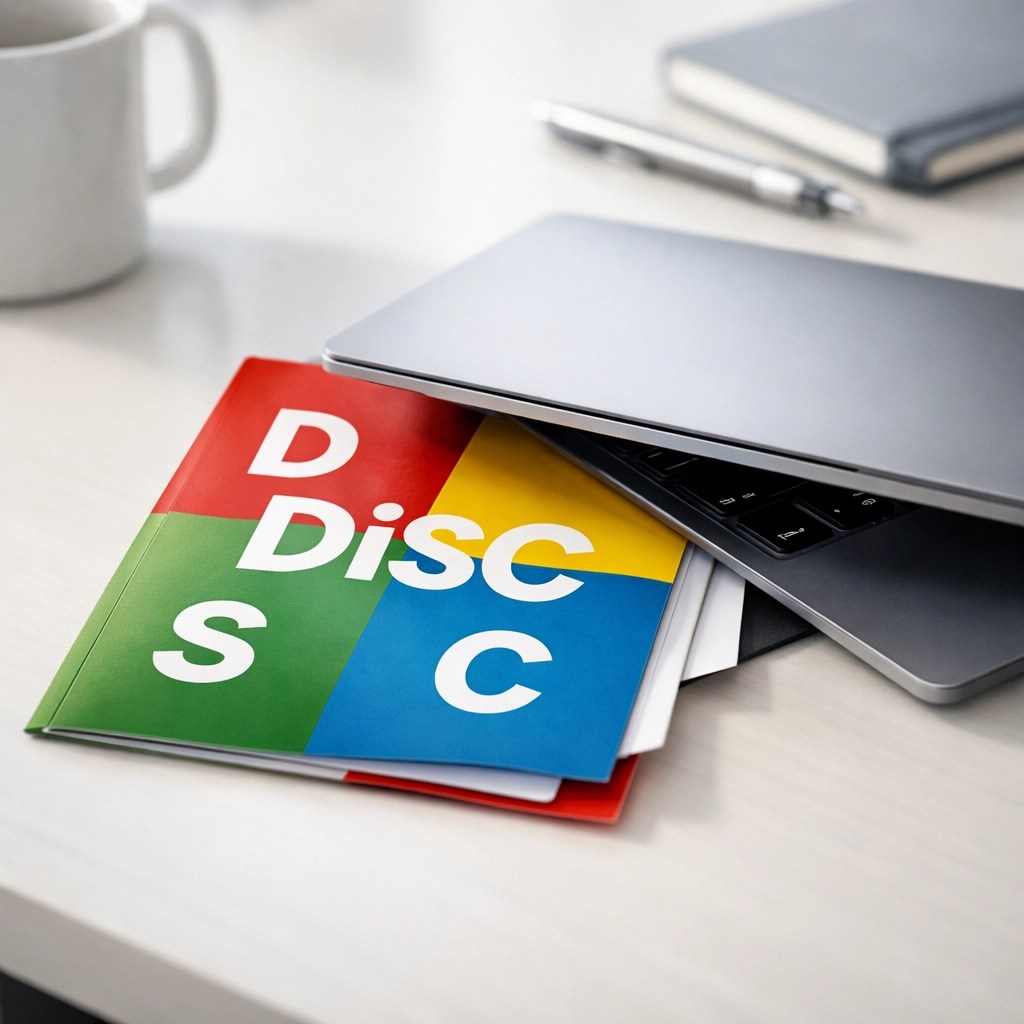
In today’s world, where half your team is likely working from a home office and the other half is probably using AI to manage their calendars, the distance between us has never been greater. We don't get the "water cooler" cues anymore. We don't see the slumped shoulders in the hallway. We just see Slack messages and Zoom boxes.
If you don't have a persistent, living "Behavioral Dashboard," you're basically flying a 747 in a storm without any instruments. Yikes.
What is a Behavioral Dashboard?
When I talk about a behavioral dashboard, I’m not talking about a fancy piece of software (though that helps). I’m talking about a mindset where your team’s behavioral styles are as visible as your monthly revenue or your project deadlines.
It’s about knowing, in real-time, how to communicate with the person on the other end of the screen.
For example, at Solved., we believe that DiSC training matters because it provides the "Rosetta Stone" for your operations. If I know that my Executive Director is a "C" (Conscientious) style, I don’t send her a vague, "Hey, can we chat?" Slack message. That's a heart attack in a bubble for a "C." Instead, I send: "Hey, I want to discuss the Q3 budget projections regarding the AI implementation. No immediate crisis, just looking for your thoughts on the data. Can we talk at 2 PM?"
See the difference? It takes ten extra seconds, but it saves hours of anxiety.
Integrating DiSC into the Triage Framework
If you’ve followed me for a while, you know I’m obsessed with the Reduce → Route → Resolve framework. It’s how we keep organizations from drowning in their own "stuff." But here’s the secret: you can’t route effectively if you don’t understand the behavior of the people you’re routing to.
- Reduce: We use DiSC to identify where "friction work" is happening. Are we having too many meetings because the "i" styles (Influence) just want to talk, while the "D" styles just want to decide? By recognizing this, we can reduce unnecessary talk-time and get to the point.
- Route: This is where the behavioral dashboard shines. I don’t route a high-detail, data-heavy audit to a "High i." That’s a recipe for a mistake. I route it to the "C." I route the "cheerleading" and team-building to the "i" or the "S." When you route to someone’s natural strength, the work moves twice as fast.
- Resolve: As the owner, I only handle the stuff that requires my specific judgment. But even then, if I’m resolving a conflict, I’m looking at my dashboard. Is this a "D vs. D" power struggle? Or an "i" feeling undervalued?

Why This Matters for ED Independence
I often talk about how an organization should be independent of its leader. If you’re an Executive Director or a Founder, you need to ask yourself: If I disappeared for a month, would the team still be able to collaborate effectively?
One of the biggest indicators of independence is whether the team has a shared language. If they depend on you to be the "translator" for every conflict, you are the bottleneck.
By implementing a behavioral dashboard, you’re giving your team the tools to resolve their own miscommunications. You’re building a culture where they can say, "Hey, I know you’re a High D and you want this done now, but I’m an S and I need to make sure we don't break the existing process. Can we find a middle ground?"
That is operational excellence in action. It’s moving from a "hero" leadership model to a "systemic" leadership model.
Stop the Burnout (Before it Starts)
We’ve seen a lot of team burnout lately. Most people think burnout is just "too much work." But if I’m honest... I think a lot of it is actually "too much friction."
Doing work that goes against your grain is exhausting. Being managed in a way that ignores your needs is draining. A behavioral dashboard acts as an early warning system.
If I see my "High S" team members are suddenly being forced into a "High D" environment of constant, rapid, chaotic change without any support, I know they’re at risk. I can pivot my management style before they hand in their resignation.

How to Get Started (The No-Fluff Version)
You don't need a million-dollar budget to do this. You just need a commitment to consistency.
- Dust off the assessments: If you’ve done DiSC before, find the results. If you haven't, it’s time to start.
- Make it visible: Put the profiles in your Slack bios, your email signatures, or a shared Team Dashboard. (We use a simple "Who We Are" sheet in our shared drive).
- Teach the "Ask": Encourage your team to ask each other: "What's the best way for me to give you feedback based on your style?"
- Lead by example: I openly share that I struggle with being too blunt. I tell my team, "If I’m being a 'D' and it's stressing you out, please call me on it." It creates psychological safety.
Real Talk: It’s Not a Magic Wand
I’ll be the first to admit... this isn't a silver bullet. You’re still going to have bad days. You’re still going to have people who just don't click. And even with a dashboard, you’re still going to have to do the hard work of leadership.
But it makes the "hard work" a whole lot easier when you aren't guessing.
As we move further into 2026, the companies that win won't just be the ones with the best AI or the most efficient supply chains. They’ll be the ones that actually understand the humans behind the keyboards.
I’d love to hear from you: have you ever had a "DiSC epiphany" that changed how you managed someone? Or maybe you've tried the dashboard idea and it flopped? I’m still learning this stuff too, even after years in the trenches.
Drop me a line or check out our other resources if you want to dive deeper into making your operations actually work for your people.

Keep solving,
Brett Bortnem
Owner & Principal Consultant
Solved. Operations & Management Solutions